

You usually ask, "do I need guide for Nepal trek," at the point where the trip stops being a daydream and starts becoming a real mountain plan. That is the right time to ask it. In Nepal, the answer is not one-size-fits-all because route rules, permit systems, altitude, remoteness, and your own trekking background all matter.
For most international travelers, a guide is either required by regulation, strongly recommended by route conditions, or simply the smartest way to keep the trip moving without avoidable delays. Nepal is not difficult because it lacks trekking options. It is difficult because the choices are broad, the logistics change, and mountain conditions do not reward casual planning.
Do I need a guide for Nepal trek routes?
On some routes, yes, a guide is effectively non-negotiable. On others, the legal requirement may be looser, but the operational case for guided support is still strong.
Restricted area treks such as Manaslu, Upper Mustang, and parts of Dolpo require organized permit handling and regulated entry. These are not routes where most international travelers should expect to move independently. The rules are tighter, the paperwork is more specific, and logistics need to be aligned in advance.
In more established trekking regions such as Everest, Annapurna, and Langtang, travelers often assume they can easily go solo because the trails are better known. Sometimes that is partly true in practical terms, but it does not erase the real issues on the ground: permit checkpoints, route changes after weather events, lodge availability in peak season, altitude management, and transport coordination before and after the trek.
The key point is simple. "Required" and "advisable" are not the same thing, but they often lead to the same decision.
When trekking without a guide sounds easier than it is
Nepal has famous trails, but famous does not always mean simple. Many first-time trekkers picture a single obvious footpath, frequent signs, and easy lodge access. In reality, a trek can involve multiple checkpoints, shifting trail conditions, local transport timing, and overnight capacity issues that do not show up clearly when you are planning from abroad.
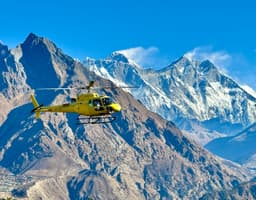
A route like Everest Base Camp, for example, is well known and has steady foot traffic in season. That helps. But flights to Lukla can be delayed, baggage handling matters, altitude days need to be managed properly, and a bad weather window can affect the entire schedule. A guide is not there only to point at the trail. A good guide manages the moving parts around the trail.
The same applies in Annapurna. A trek may look straightforward on a map, but permit checks, side-route decisions, weather variability, and lodge crowding can reshape the plan quickly. If you are on a tight vacation schedule, operational support is not a luxury. It is what protects the trip.
Safety is the strongest reason most travelers choose a guide
The mountains in Nepal are accessible, but they are still high mountains. Altitude is the main issue, not technical climbing. Many trekkers are fit enough to walk long days, yet still underestimate acclimatization, hydration, pacing, and the early signs of acute mountain sickness.
A certified and experienced guide helps reduce exactly those risks. They monitor pace, adjust the itinerary when needed, identify when a headache is normal fatigue and when it is becoming a concern, and make practical decisions before a problem becomes a rescue situation. That is a major difference.
There is also a more basic safety layer that people often overlook. Trail intersections can be missed in bad visibility. Snowfall can change the feel of a route. Landslides, local closures, or transport disruptions can force rerouting. If you are trekking alone, every one of those decisions lands on you. If you are trekking with guided support, you have someone on the ground who is already working the problem.
A guide also saves time before the trek starts
Many travelers only think about the walking days. In Nepal, the success of a trek often depends on what happens before day one.
Permits must be arranged correctly. Airport transfers need to be aligned with domestic flights or road departures. Hotels, trek start points, and return logistics have to connect cleanly. If you are adding city sightseeing, a helicopter return, a cultural extension, or a shorter day hike before or after the main trek, the coordination becomes even more important.
That is why guided trekking in Nepal is often less about hand-holding and more about trip execution. A reliable local operator handles the permits, transport, guide assignment, pace planning, and contingency response as one package. For travelers flying in from the US, Canada, Australia, or Europe, that removes a lot of uncertainty.
When a guide is optional, not mandatory
There are cases where a guide is optional in practical terms. If you are an experienced trekker, comfortable with mountain travel, able to manage your own pace conservatively, and planning a popular route in stable season conditions, you may feel capable of trekking with minimal support.
That said, optional does not mean equally efficient. Independent trekking may look cheaper on paper, but it can create hidden costs through route mistakes, extra nights, transport changes, or poor acclimatization decisions. It can also reduce flexibility if something changes mid-trip.
For repeat trekkers with Nepal experience, the equation may be different. For first-time visitors, families, couples on a fixed holiday window, and travelers combining trekking with other activities, guided support is usually the cleaner and safer choice.
Do I need a guide for Nepal trek if I am fit?
Fitness helps, but fitness does not replace route knowledge or altitude judgment.
This is one of the most common planning mistakes. A traveler who hikes regularly at home may assume that strong legs and cardio are the main requirement. In Nepal, physical fitness is only one part of the picture. You also need good pacing, realistic daily elevation gain, weather awareness, and local logistics support.
A very fit trekker can still ascend too fast. A moderate but disciplined trekker with a good guide often performs better over the full itinerary. In other words, mountain success is not won by speed. It is won by smart progression.
The porter and guide question
Some travelers ask whether hiring only a porter is enough. That depends on the route and on your confidence level, but a porter and a guide do different jobs.
A porter reduces your load, which can improve comfort and altitude performance. A guide handles navigation, permits, local coordination, safety oversight, schedule decisions, and communication with lodges and transport providers. If you only hire a porter, you still carry the leadership responsibility for the trek.
For straightforward, lower-risk itineraries, some trekkers are comfortable with that. For higher-altitude or more remote routes, a guide is the better operational choice.
What kind of treks most benefit from guided support
The stronger the logistical complexity, the stronger the case for a guide. Everest Base Camp treks, Manaslu Circuit treks, Upper Mustang programs, multi-region itineraries, and luxury treks with helicopter return all benefit from structured execution.
Shorter routes can still benefit as well, especially if your time is limited. A 5-day to 8-day trek around Kathmandu, Pokhara, Langtang, or lower Annapurna may not be extreme, but guided planning keeps the trip efficient. You waste less time on transfers, permit confusion, and lodge coordination.
This is where an on-ground operator matters. Companies like Shepherd Holidays build trekking programs around actual execution, not just route descriptions. That difference shows up when flights move, trails change, or travelers need a cleaner solution than piecing together each part themselves.
Cost versus value
If your only question is whether a guide adds cost, the answer is yes. If your real question is whether a guide adds value, the answer for most Nepal treks is also yes.
A guide adds safety margin, local decision-making, permit and checkpoint support, communication help, and better control over the full trip timeline. For many travelers, that value is higher than the price difference between independent planning and a guided itinerary.
It is also worth being honest about your trip style. If you want maximum independence and are comfortable solving problems in remote areas, you may accept the trade-off. If you want a structured itinerary, professional support, and fewer unknowns, guided trekking fits better.
The practical answer
If you are asking the question for a first Nepal trek, the practical answer is usually yes, you should use a guide. On restricted routes, that is often required. On major classic routes, it is still the better decision for safety, acclimatization, permits, transport coordination, and overall trip reliability.
Nepal rewards good preparation more than bold improvisation. A guide does not reduce the adventure. A good guide removes the noise around the adventure so you can focus on the trail, the mountains, and the days you came here to experience.
If you are still deciding, match the level of support to the route, season, altitude, and your real experience level - not the version of yourself that only exists when looking at the map.