

Most Everest-region treks ask you to choose. You either take the classic Everest Base Camp route or head toward the blue lakes and broad views of Gokyo. The gokyo lakes trek with cho la pass is one of the few itineraries that lets you do both, but it only works well when the pacing, acclimatization, and crossing day are handled properly.
For travelers coming to Nepal on a fixed vacation window, that matters. This route is not difficult because it is technical in the climbing sense. It is demanding because it combines long walking days, repeated altitude gain, cold mornings, and one high pass that can change character quickly with weather and trail conditions. If you want one Everest trek that gives strong variety without committing to a full expedition-style schedule, this is often the smartest choice.
Why choose the gokyo lakes trek with cho la pass
This route connects the Gokyo Valley with the Everest Base Camp side of the Khumbu through Cho La Pass, usually at 17,782 feet. That creates a better overall mountain circuit than a simple out-and-back trek. You get glacial lakes, Ngozumpa Glacier, Gokyo Ri, the Khumbu side villages, and the higher traffic landmarks around Lobuche and Gorak Shep.
The real advantage is contrast. The Gokyo section feels wider, quieter, and more reflective, while the Everest Base Camp side is busier and more iconic. For many trekkers, that balance is the reason to do it. You are not repeating the same valley for days, and the scenery changes in a meaningful way.
There is a trade-off, though. Cho La Pass is not a casual add-on. If you are unsure about steep, rocky terrain or have limited tolerance for cold starts and long crossing days, a standard Gokyo trek or classic Everest Base Camp trek may be the better fit.
Route overview and trip length
A typical gokyo lakes trek with cho la pass takes 15 to 18 days depending on your flight schedule, acclimatization plan, and whether the itinerary includes Everest Base Camp, Kala Patthar, or both. Most trips begin with the flight to Lukla, then follow the standard lower trail through Phakding and Namche Bazaar before branching toward Dole, Machhermo, and Gokyo.
From Gokyo, the route normally includes an early climb of Gokyo Ri for one of the strongest panoramic viewpoints in the region. After that comes the key transition day over Cho La Pass toward Dzongla and then onward to Lobuche, Gorak Shep, Everest Base Camp, and Kala Patthar before descending through Pheriche, Namche, and Lukla.
Some operators run the route in the reverse direction. That can work, but for most travelers, approaching the pass from Gokyo after proper acclimatization is cleaner from a pacing standpoint.
Common day plan
A balanced itinerary usually follows this pattern: Lukla, Phakding, Namche, acclimatization day, Dole, Machhermo, Gokyo, acclimatization or Gokyo Ri, Cho La crossing to Dzongla, Lobuche, Gorak Shep with Everest Base Camp, Kala Patthar, then descent. Stronger trekkers may compress it, but cutting acclimatization too aggressively is where many Everest itineraries go wrong.
How hard is it really?
This is a strenuous trek for most travelers, even if they are fit at sea level. The challenge is less about speed and more about performing consistently above 13,000 feet for multiple days. Cho La Pass adds uneven terrain, potential snow or ice, and a long day when people are already carrying altitude fatigue.
If you hike regularly, can manage six to eight hours of walking, and prepare for elevation, the route is realistic. If your experience is limited to weekend walks and gym cardio, it is still possible, but your margin for comfort will be smaller. In that case, a guided itinerary with conservative pacing becomes more valuable.
Age alone is not the deciding factor. Preparation, recovery, hydration, and acclimatization discipline matter more than whether you are 30 or 55.
Best season for this route
Spring, from March to May, and fall, from late September to November, are the standard windows. Both usually offer the clearest conditions and the best chance of a safe, efficient pass crossing.
Spring tends to bring slightly milder temperatures and active trekking traffic. Fall often delivers very crisp views after the monsoon, but nights can be colder as the season advances. Winter is possible for experienced trekkers with proper support, but Cho La can become significantly more complicated if there is fresh snow or ice. Monsoon season is the weakest option because flights, visibility, and trail conditions become less predictable.
If your priority is smoother logistics rather than the quietest trails, October and November are usually the strongest months.
Altitude, acclimatization, and safety
Altitude is the main operational issue on this trek. You sleep high, walk high, and cross a pass that sits well above the level where many people start feeling the effects of thinner air. A good itinerary builds in acclimatization at Namche Bazaar and often around Gokyo or nearby elevations.
The mistake many independent trekkers make is assuming they feel fine until they suddenly do not. Headache, poor sleep, nausea, unusual fatigue, and loss of appetite should be taken seriously. Good decision-making at altitude is not dramatic. It is steady, conservative, and based on symptoms rather than wishful thinking.
This is one reason guided logistics matter in the Khumbu. Your guide is not just showing the path. A capable operator is managing pace, overnight sequence, route conditions, weather adjustments, permits, and the decision on whether the pass should be attempted that day at all. For a complex Everest circuit, that support is practical, not optional.
What you see on the trail
This route stays popular because it delivers more than one headline view. Gokyo Lakes are the visual anchor on the western side of the trek, with sharply colored alpine water set below snow peaks and the massive ice of Ngozumpa Glacier. Gokyo Ri then opens the wider panorama, with Everest, Lhotse, Makalu, and Cho Oyu all part of the conversation on a clear morning.
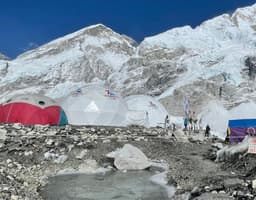
After the Cho La crossing, the atmosphere changes. The trail feels harsher, more glacial, and more exposed. Once you join the Everest Base Camp corridor, the landscape becomes familiar from expedition photography - moraine, wind, stone, and high camps under very large mountains.
For many travelers, Kala Patthar is the emotional high point rather than base camp itself. Everest Base Camp is iconic, but Kala Patthar gives the clean summit-facing perspective most people imagine when they book the trip.
Permits, logistics, and support
For international travelers, this trek is easiest when booked as a guided package with permits, domestic flight coordination, airport transfers, guide service, porter support, accommodation planning, and contingency handling already organized. The Khumbu is not the place to discover that your timeline has no flexibility.
At a minimum, you need the required regional permits and a realistic plan for Lukla flight changes. Weather delays are part of Everest travel. A strong operator plans around them instead of treating them as rare exceptions.
Shepherd Holidays handles exactly this kind of on-ground execution for Nepal trekking programs, which is why many overseas travelers prefer working with a Kathmandu-based operator rather than trying to stitch the route together from abroad.
What to pack without overpacking
You need a proper layering system, broken-in trekking boots, warm gloves, a down jacket, sun protection, and a sleeping setup that matches cold teahouse nights. Trekking poles are especially useful on the pass and on long descents.
Do not treat this like a general hiking trip. The gap between sunny afternoon walking and pre-dawn wind at high altitude is significant. At the same time, do not overpack with duplicate clothing and nonessential gadgets. Heavy bags make every uphill section harder and reduce your comfort by day four, not day one.
A practical gear review before arrival saves trouble. If you are booking a guided trip, ask exactly what is included, what can be rented in Kathmandu, and what should be brought from home.
Is this the right Everest trek for you?
If you want the broadest Everest-region experience in one itinerary, this route makes a strong case. It suits trekkers who value scenery variety, are willing to work for the pass crossing, and want more than a basic Everest Base Camp out-and-back. It is also a good fit for repeat Nepal visitors who do not want a route that feels too familiar.
If your main goal is simply to reach Everest Base Camp with the least complexity, then the standard EBC trek may be the better choice. If you care more about mountain lakes, panoramic viewpoints, and a quieter valley, a Gokyo-focused itinerary without Cho La may be smarter. The best route depends on your time, fitness, tolerance for cold and altitude, and how much uncertainty you want in the high section.
The strongest trips in the Khumbu are rarely the fastest ones. They are the ones where the route, weather window, and support team line up well enough that you can focus on walking, adjusting, and taking the mountains as they come.