

If you are comparing a helicopter flight to Everest against a full trek, the real question is not just is everest heli tour worth it - it is worth it for what kind of traveler, timeline, and comfort level. For some people, it is the smartest way to experience the Everest region in a single day. For others, it is an expensive shortcut that misses the slower rewards of being on foot. The value depends on what you want the trip to do.
An Everest heli tour is usually priced as a premium mountain experience, so it should be judged like one. You are not paying only for transport. You are paying for time efficiency, high-altitude access, aerial views, guided logistics, airport coordination, weather management, and a structured way to reach one of the most iconic mountain landscapes on earth without committing to a 10 to 14-day trek.
Is everest heli tour worth it for most travelers?
For travelers with limited time, yes, often it is. If you have four to seven days in Nepal and want one major Himalayan experience without the physical demand of trekking, a heli tour can deliver extraordinary mountain exposure in a compact format. You can leave Kathmandu in the morning and return the same day after seeing the Everest region from the air, usually with landings around key viewpoints and breakfast stops depending on the itinerary and conditions.
It is also worth it for travelers who want comfort and controlled logistics. That includes older travelers, families with mixed fitness levels, honeymooners, photographers, and business travelers adding a high-impact day trip to a short Nepal program. In those cases, the helicopter is not replacing a trek. It is solving a practical problem.
Where it becomes less worth it is when your main goal is the trekking journey itself. If you care about walking through Sherpa villages, adjusting gradually to altitude, sleeping in teahouses, and earning the mountain views step by step, a heli trip will feel compressed. It can be spectacular, but it cannot replicate the emotional progression of a trek.
What you are actually paying for
The price of an Everest Base Camp helicopter tour can look high at first glance, especially for travelers seeing online quotes without context. But mountain aviation in Nepal is not a simple point-to-point transfer. Operations involve aircraft availability, fuel planning, airport slots, changing weather windows, payload limits, and route adjustments based on altitude and conditions.
You are also paying for speed. A trek to Everest Base Camp usually requires nearly two weeks when you include acclimatization days, flights, permits, guides, porters, and contingency planning. A helicopter tour condenses the mountain access dramatically. For travelers whose vacation time is limited, that time saving has real value.
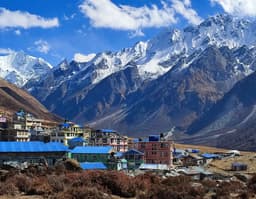
The second part of the value is viewpoint quality. On a clear day, the aerial perspective is outstanding. You see the Khumbu region in scale - ridgelines, glaciers, deep valleys, settlements, and the wider mountain system around Everest. That is a very different visual experience from trekking, where the views unfold in sections.
The third part is logistics control. With a professionally operated trip, the route, check-in timing, weather coordination, and ground handling are managed for you. For international travelers planning from the US, Canada, Australia, or Europe, that matters. Mountain trips in Nepal are much easier when one operator handles the moving parts on the ground.
The main trade-off: depth versus efficiency
This is where the decision gets simple. A heli tour gives you efficiency. A trek gives you depth.
A helicopter trip is ideal if your priority is to see Everest comfortably, safely, and quickly. It works especially well for milestone trips, anniversary travel, luxury add-ons, or short itineraries combining Kathmandu, Pokhara, Chitwan, and one premium Himalayan day.
A trek is better if your priority is immersion. You hear the villages wake up, cross suspension bridges, spend nights in the mountains, and let the landscape build gradually. That slower pace changes how people experience Everest. It is physically harder, less predictable, and much longer, but often more emotionally satisfying.
Many travelers solve this by combining both formats. A common choice is trekking one way and using a helicopter return from the Everest region. That gives you the trekking experience without repeating the full route back out. If you are on the fence, this hybrid option often offers the best balance.
Who gets the best value from an Everest heli tour?
The travelers who tend to feel best about the price are those who know exactly why they are booking it. They usually fall into a few clear groups.
First, there are time-limited travelers. If you only have a few days in Nepal, the heli tour can turn an impossible trekking plan into a realistic Himalayan experience.
Second, there are comfort-first travelers. They want mountain access without long walking days, cold teahouse nights, or the uncertainty of a multi-day high-altitude itinerary.
Third, there are celebration travelers. Honeymoons, birthdays, family milestone trips, and premium private journeys often justify the spend because the flight becomes the centerpiece of the Nepal program.
Fourth, there are travelers with moderate mobility limits or mixed group fitness. A helicopter can make the Everest region accessible to people who may never attempt the trek but still want to see it properly.
If none of these describe you, and you have the time and fitness for trekking, the value equation becomes less obvious.
Is everest heli tour worth it compared with trekking costs?
This is not just a helicopter versus hiking comparison. It is a comparison between two very different products.
A trek may cost less upfront than a private helicopter, but it also requires more days, more accommodation, more meals, support staff, permits, internal flights, gear, and a larger commitment to uncertainty. A heli tour is expensive, but it is concentrated. You are buying one high-cost day instead of many moderate-cost days.
That means the better question is not which one is cheaper. It is which one fits your schedule and expectations better. If taking two weeks off work is difficult, the helicopter may actually be the more practical choice despite the higher day rate.
If your travel budget is fixed and the mountain journey itself matters more than speed, trekking usually offers stronger value per dollar.
Weather, altitude, and operational reality
One reason to book this trip with an experienced in-country operator is that mountain flights are heavily shaped by conditions. Weather can change fast in the Himalayas. Flights may depart early, adjust landing points, or face delays and rescheduling. That is normal, not a red flag.
Altitude is another factor. Even though you are not trekking for days, you are still entering a high mountain environment. Reputable operators manage this through structured routing, brief landings, passenger weight distribution, and flight procedures suited to altitude limits and safety requirements.
This is also why the cheapest quote is not always the best value. Ask what is included, how weather contingencies are handled, whether the flight is group sharing or private, what landing plan is typical, and how airport transfers and communications are managed. Strong operations matter as much as the aircraft itself.
For travelers who want a clear, supported booking process, Shepherd Holidays typically fits that need well because the company operates with a practical, logistics-led structure rather than a loose reseller model.
When the heli tour is not worth it
There are cases where the answer is no.
If you are booking purely because Everest sounds famous, but you do not actually enjoy flights, cold early starts, changing weather, or high-cost short experiences, you may not love it. The day can begin very early, involve waiting windows, and move fast once conditions open.
It is also not the best choice for travelers who want quiet, slow travel. Helicopter tourism is exciting and efficient, but not especially meditative. If your dream is to spend days in the mountains, read by a teahouse stove, and arrive at Everest through effort and patience, the helicopter will feel too brief.
And if budget pressure will make you second-guess the spend for months afterward, the trip may not feel worth it even if the scenery is exceptional. Premium travel should feel clear and intentional, not financially uncomfortable.
A practical way to decide
Ask yourself three questions. Do you have limited time? Do you want Everest with minimal physical strain? Are you comfortable paying more for speed and convenience?
If the answer is yes to all three, an Everest heli tour is usually worth it. If only one is yes, you may be forcing the fit. In that case, consider a shorter trek, a helicopter return after trekking, or a different mountain flight product.
The best Everest trips are not the ones with the biggest price tag. They are the ones matched correctly to the traveler. If you choose a heli tour for the right reason, it can be one of the most efficient and memorable days you will have in Nepal.