

You do not need “more options” for Nepal - you need the right package structure.
Nepal planning gets messy fast because the trip is rarely just one thing. You might want Everest views but not a 12-day trek. Or you want temples and food in Kathmandu, but also two quiet nights by a lake. Or your group has mixed fitness levels, and the best vacation is the one that does not turn into a negotiation every morning.
The best holiday packages Nepal travelers book are the ones that match three realities: your available days, your altitude comfort level, and how much logistics you want handled on the ground (permits, flights, vehicles, guides, contingency plans). Below is a practical, itinerary-first way to choose.
What “best holiday packages Nepal” really means
“Best” is not a single itinerary. It is a package that is built around the highest-risk variables in Nepal travel: weather windows, mountain flight reliability, road conditions, and altitude.
A strong package is clear on inclusions (permits, domestic flights, private transport, guide coverage), has buffer where Nepal needs buffer (especially for Lukla flights and mountain weather), and sets expectations early (tea house level, bathroom standards, drive times, and what happens if a flight is delayed).
If an itinerary looks perfect on paper but ignores those variables, it is not “best.” It is fragile.
Start with your time: 3 buckets that decide everything
Most Nepal trips fall into one of three time buckets, and each one has a different “best” answer.
4-7 days: high impact, low complexity
This is the range for Kathmandu Valley culture, a Pokhara add-on, short hikes, or a premium aerial day (heli or mountain flight). You are optimizing for impact without long transit chains.
8-14 days: the classic Nepal holiday
This is where you can do a real trek (Annapurna, Langtang, short Everest region options), or combine city plus jungle safari plus light hiking. It is the sweet spot for travelers coming from the US who want depth without a full expedition calendar.
15-26 days: full trekking and remote regions
This is for Everest Base Camp trekking, Manaslu Circuit, Upper Dolpo, longer Annapurna programs, and multi-region travel with proper acclimatization and weather buffers.
Category 1: Trekking packages (the backbone of Nepal)
If you want a trekking-first holiday, the “best” choice is the one that fits your fitness and your tolerance for altitude - not the one with the most famous name.
Everest region treks: iconic, higher logistical sensitivity
Everest treks are high reward, but they rely on a chain that can break: Kathmandu-Ramechhap/Lukla flights, weather, and altitude days that cannot be rushed.
Everest Base Camp Trek (typically 12-14 days on the ground, plus international travel days) is the flagship for a reason. It delivers big scenery, Sherpa culture, and a clear trail system with experienced support infrastructure.
Trade-off: it is busy in peak season, and delays happen. The “best” Everest package is the one that builds in an extra day and has a realistic plan for flight disruption.
If you want Everest views with less time and less commitment, consider shorter Everest region treks or a viewpoint-focused itinerary around Namche and Tengboche. You still get high Himalayan scale, but with a simpler itinerary.
Annapurna region treks: flexible and time-efficient
Annapurna is the most flexible trekking region for travelers who want choice in length and comfort level. You can do short panoramic treks or longer circuits.
For many visitors, the Ghorepani Poon Hill Trek (commonly 4-5 days trekking, typically packaged as 7-9 days including Kathmandu and Pokhara logistics) is one of the best-value holiday formats in Nepal. It has strong views, moderate altitude, and easier access through Pokhara.
If you want a more immersive trek with bigger terrain, Annapurna Base Camp is a solid mid-range choice. It takes longer than Poon Hill and pushes higher, but it still avoids the flight dependency of the Everest corridor.
Trade-off: road access has expanded in parts of the region. The “best” Annapurna package is the one that manages drive segments smartly and prioritizes trail quality.
Langtang Valley: close to Kathmandu, strong culture-to-effort ratio
Langtang is often the best trekking answer for travelers who want a real Himalayan trek without domestic flights. It is reached by road, which brings its own variable (drive time and road conditions), but the overall logistics are straightforward.
Trade-off: the drive can be long for the distance. If you value predictability, choose a package that uses a private vehicle and schedules the drive to avoid late arrivals.
Manaslu, Dolpo, Rara: for experienced trekkers who want remoteness
If your definition of “best” is fewer crowds and wilder terrain, these regions deliver - but they require tighter operations. Permit requirements are stricter, guides must be properly qualified, and evacuation planning is not optional.
Trade-off: costs rise, and you need more days. These are not “add-on” treks - they are the trip.
Category 2: Everest helicopter and premium aerial packages
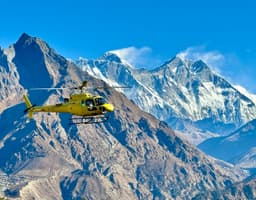
For travelers with limited time, family constraints, or a strong preference for comfort, an Everest Base Camp helicopter tour can be the best holiday package Nepal offers in a single day.
A well-run heli program is defined by operational details: aircraft performance for the season, pilot decision authority, landing permissions, passenger weight management, weather briefings, and clear refund/reschedule policies.
Some travelers choose a hybrid: trek up, helicopter return. This is popular in Everest and Annapurna programs because it reduces time, limits downhill impact on knees, and adds a premium finish.
Trade-off: helicopters are weather-dependent and priced accordingly. If you are building your “once-in-a-lifetime” plan, keep an extra day in Kathmandu so your flight has room to move.
Category 3: Culture and city packages (Kathmandu plus smart extensions)
Nepal is not just mountains. A strong cultural package is itinerary-led and transportation-aware.
Kathmandu Valley UNESCO heritage circuits (often 2-4 days depending on pace) work best when they are grouped by geography. Doing Bhaktapur and Patan on separate days can reduce cross-city traffic time, and early starts matter if you want cleaner photos and quieter temple courtyards.
Many travelers pair Kathmandu with Pokhara for a balanced holiday: culture, food, a softer pace, and optional day hikes (Sarangkot sunrise, Australian Camp, Dhampus-style short treks). This is often the “best” answer for couples and families who want variety without altitude pressure.
Trade-off: drive time between Kathmandu and Pokhara is a real factor. Flights save time but have their own weather and scheduling variables. The best package is the one that matches your risk tolerance: road certainty versus flight efficiency.
Category 4: Jungle safari packages (Chitwan and beyond)
If you want wildlife as a centerpiece, Chitwan National Park is the standard. A well-built safari package typically includes structured activities (jeep safari, canoeing, guided walks where permitted) and clear accommodation standards.
This category combines well with a culture-first or light-hiking itinerary. For many first-time Nepal travelers, Kathmandu + Pokhara + Chitwan (10-14 days depending on pace) is the best all-around holiday format.
Trade-off: safari sightings are never guaranteed, and the experience depends on guiding, timing, and park rules. Choose packages that emphasize safety, permits, and realistic expectations.
Category 5: Adventure add-ons (rafting, bungee, zipline)
These are best used as deliberate “one-day intensity” additions, not as filler. Rafting works particularly well as a transition day between Kathmandu and Pokhara or as a dedicated overnight.
Trade-off: water level and season change the experience. A good operator will set expectations on river grade, safety coverage, and what happens in poor conditions.
How to judge package quality (without getting lost in marketing)
Most travelers compare itineraries by destinations and photos. That is normal, but quality is usually hidden in operations. When you are deciding between two similar “best holiday packages Nepal” options, ask questions that reveal how the trip will actually run.
Look for clarity on permits and regulations
Trekking permits, conservation area fees, and restricted area permits (where applicable) should be named clearly. If the package description is vague, your on-ground day can become paperwork day.
Ask what happens when a flight or road segment fails
Everest-region flights are the classic example, but weather affects helicopters too, and landslides affect roads. A reliable package has a contingency plan and explains the cost implications before you arrive.
Verify guide standards and safety discipline
Altitude management is not motivational - it is procedural. The best packages specify acclimatization logic, guide-to-guest ratios for remote regions, and a clear approach to emergencies.
Understand accommodation honestly
Tea houses vary by region and altitude. “Luxury” in the mountains is different than luxury in a city hotel. A professional operator will explain where private bathrooms are realistic and where they are not.
Sample “best-fit” package matches by traveler type
If you want a clear shortcut to decision-making, match your trip style to the package category.
If you are a first-time visitor who wants variety and predictability, a 10-14 day Kathmandu-Pokhara-Chitwan program is often the best balance of culture, scenery, and comfort.
If you are coming primarily for the Himalayas and you have 12-16 days on the ground, choose a trek that fits your altitude comfort: Everest Base Camp if you want the iconic route and can handle the acclimatization schedule, or Annapurna Base Camp / Langtang if you prefer fewer flight dependencies.
If you are time-limited but still want Everest in a meaningful way, an Everest helicopter day program or a trek with helicopter return can deliver the highlight with less calendar pressure.
If your priority is remoteness and you are comfortable with longer days and tighter rules, Manaslu, Dolpo, or Rara-style programs can be the “best” - but only if you commit to the required days and proper permits.
Choosing the right operator: why on-ground capability matters
Nepal trips are won or lost on execution: vehicles that show up when the road is rough, guides who manage pace and altitude correctly, and operations teams that can rework plans when weather shifts.
If you want an operator that is set up for that reality, look for transparency signals (published terms, safety/QHSE posture, clear documentation practices, and a real logistics footprint). Shepherd Holidays is Kathmandu-based and runs end-to-end programs across trekking, heli experiences, cultural circuits, and safaris, built around certified operations and on-ground coordination (https://www.shepherdholidays.com/).
A final practical filter: choose the package you can actually complete comfortably. Nepal rewards ambition, but it rewards good pacing more. If your itinerary leaves you one bad weather day away from missing your international flight, adjust the plan now - your future self on the ground will thank you.